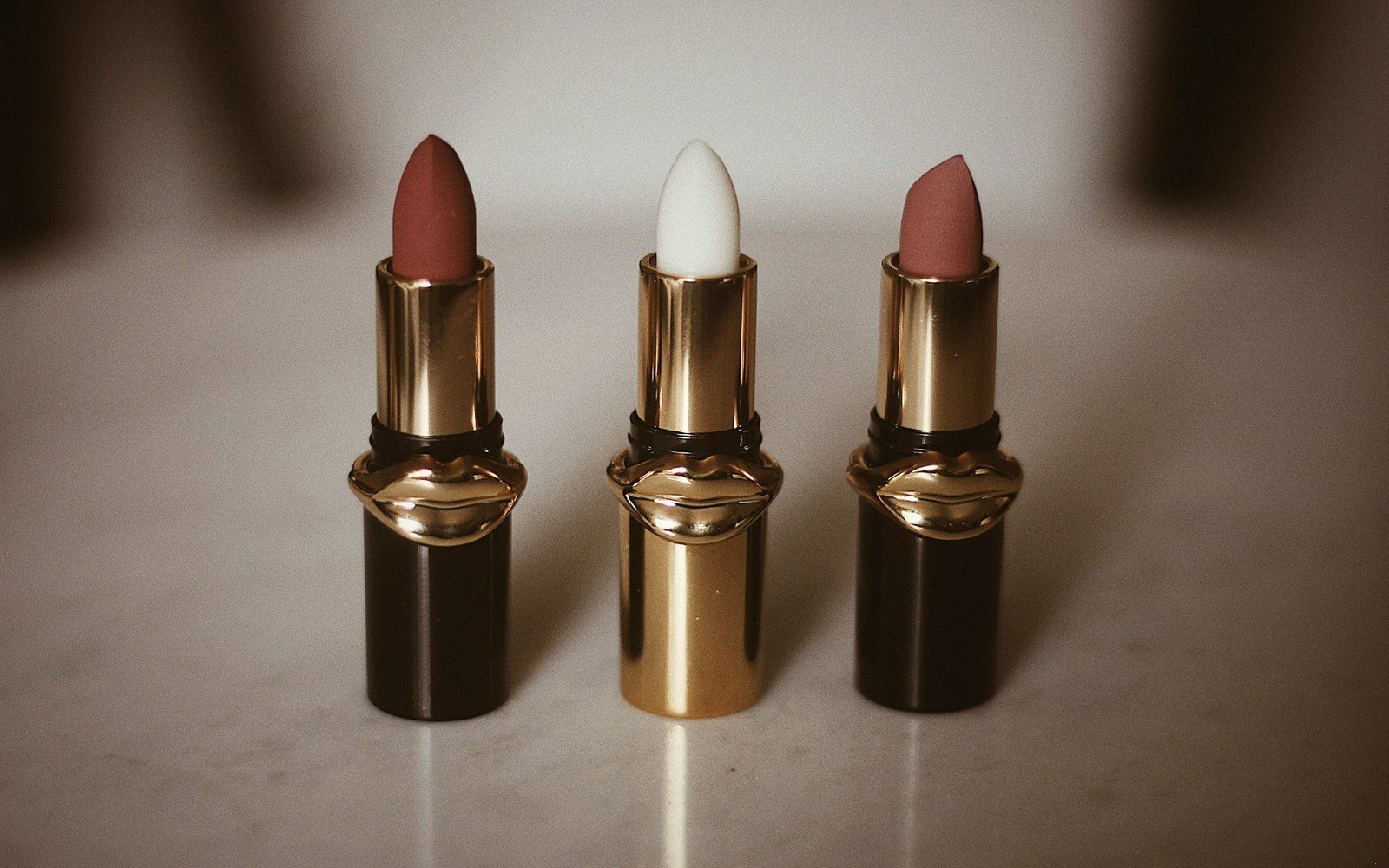
The gap between a £6 mascara and a £40 one is, frankly, humbling. Mascara dries out within three months regardless of price, so an expensive tube isn't giving you three months of better lashes — it's giving you three months of a nicer cap.
Where drugstore genuinely wins
The same logic applies to most lip balms, nail polish, and setting spray. These are products where the formula is largely commodified; the premium you pay goes on packaging, fragrance, and the name embossed on the side. A drugstore setting spray with the right polymers holds makeup just as tenaciously as a luxury version, and you'll use it freely rather than rationing it, which actually makes it work better.
Eye shadow is another place where the price gap rarely justifies itself for everyday colours. Mattes especially — the pigment technology in a matte taupe or a matte brown is well understood, and mass-market brands have had decades to get it right. Loose pigments, pressed neutrals, and most single shadows from drugstore lines perform on par with their luxury equivalents once they're on a primed lid. Shimmer formulas are slightly more variable (the finer the particle, the higher the production cost), but even there, some of the most consistently praised formulas in the beauty community have always come from the pharmacy shelf.
Cleansers are perhaps the most liberating category. Because you rinse a cleanser off within a minute, the delivery of any active ingredients it contains is minimal — so paying luxury prices for a cleanser loaded with peptides or botanicals is largely a vanity exercise. A gentle, pH-appropriate cleanser that doesn't strip your skin barrier is all you need, and cleansing without stripping your skin is genuinely achievable on a tight budget. Save the money.
Where the splurge earns its keep
Skincare that stays on your skin is where the calculus shifts. Serums, moisturisers, and treatments sit on (or in) your skin for hours; the quality of the formulation, the stability of the active ingredients, and the delivery system all have time to matter. Vitamin C serums are the canonical example: L-ascorbic acid is notoriously unstable, and a cheaper formula that's already oxidised in the bottle is doing nothing useful. More reputable brands — not necessarily the most expensive, but those with a genuine R&D investment — tend to have better stabilisation and more consistent potency.
Retinoids are a similar case. Over-the-counter retinol products vary wildly in encapsulation quality and actual retinol concentration, and a more considered formula tends to be more effective and less irritating. That said, 'luxury' doesn't automatically mean 'better' here — some mid-range and prescription-access options outperform their premium competitors. Do the ingredient homework rather than trust the price point, and the retinoid question is worth understanding properly before you spend anything.
In makeup, the categories where luxury genuinely earns a premium are foundation and skin tints, complexion products that rely on skin-like texture and longevity — and tools. A well-made foundation tends to have finer pigment particles that blend more seamlessly and photograph more naturally. And a good dense brush or well-constructed sponge applicator does meaningfully change results; cheap tools can drag, streak, and shed. Buy the brush, not the eyeshadow.
| Category | Save (drugstore) | Splurge (considered) |
|---|---|---|
| Mascara | Yes — it expires in 3 months either way | — |
| Setting spray, balm, polish | Yes — formulas are commodified | — |
| Matte eyeshadow | Yes — decades-old pigment tech | — |
| Cleanser | Yes — it rinses off in a minute | — |
| Vitamin C serum | — | Yes — stability is everything |
| Retinoids | — | Considered formulas; not necessarily 'luxury' |
| Foundation / skin tint | — | Yes — finer pigment, better texture |
| Tools | — | Yes — a one-time investment that lasts years |
The honest middle ground
Price is a rough proxy for quality at best. The most useful framework isn't drugstore versus luxury but leave-on versus rinse-off and tools versus consumables. Leave-on treatments justify more spend. Rinse-off products mostly don't. Consumables you replace constantly (mascara, lip balm, setting powder) benefit most from being affordable because you'll use them generously and replace them on schedule. Tools are a one-time investment where quality pays off over years.
There's also the pleasure factor, which is real and worth naming. A beautifully weighted compact or a fragrance that makes your morning routine feel like a ritual has genuine value — just don't confuse that value with skincare efficacy. Luxury beauty is often very good; it's just not always better, and knowing the difference is what turns a beauty budget into a beauty strategy.
Buy the £6 mascara. Invest in the serum. Everything else, test and decide.