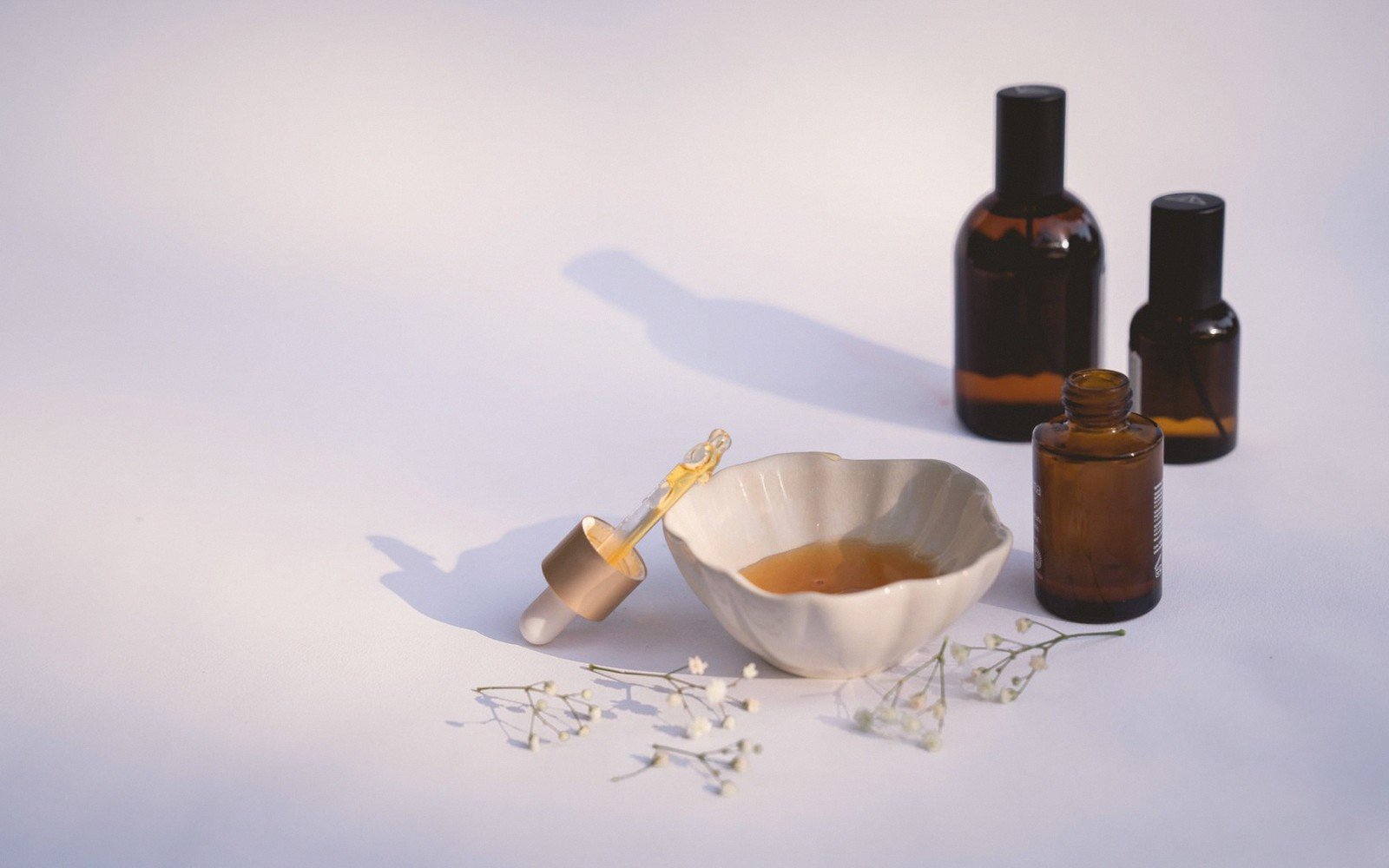
If you've spent any time reading about skincare actives, you'll have noticed that retinoids come up constantly — and for once, the frequency is justified. Retinoids are a family of vitamin A derivatives that work at a cellular level, nudging skin to turn over faster, stimulating collagen production, and helping to regulate the processes that lead to clogged pores.
That's a genuinely unusual combination. Most ingredients do one thing well; retinoids tend to do several, which is why dermatologists have been recommending them since tretinoin — the prescription-strength version — was first studied for acne back in the late 1960s.
What retinoids actually do (and why they're different)
The family runs from mild to powerful. Over-the-counter products typically contain retinol, retinaldehyde (also called retinal), or newer esters like retinyl propionate. Prescription options include tretinoin and, for severe acne, isotretinoin (which is oral, not topical, and an entirely different conversation). The higher up the chain you go, the more potent the effect — and the more likely your skin is to protest the introduction.
That protest has a name: retinoid dermatitis, though most people just call it the purge, or the flake. It's real. It's common. And it's largely avoidable if you start correctly.
| Form | Where you get it | Good to know |
|---|---|---|
| Retinyl esters | Over the counter | Gentlest; slowest to show results |
| Retinol | Over the counter | The standard starting point — 0.025–0.1% |
| Retinaldehyde | Over the counter | One conversion step from the active form; gentler than tretinoin |
| Tretinoin | Prescription | The most-studied benchmark; warrants professional guidance |
How to start without the drama
The single biggest mistake people make is treating a retinoid like a regular moisturiser — applying it every night from day one and then wondering why they're peeling by week two. Your skin needs time to build tolerance. Every dermatologist's standard advice is to begin slowly: once or twice a week for the first month, then gradually increase frequency. That's not being timid; that's how you actually get long-term results without abandoning the product in frustration.
A pea-sized amount — genuinely the size of a pea — is enough for your whole face. Apply it to dry skin, because damp skin can drive absorption too fast and amplify irritation. If you're particularly sensitive, the "sandwich" method is worth trying: moisturise first, apply retinoid, moisturise again. This buffers the delivery without cancelling the effect.
Timing matters too. Retinoids degrade in sunlight, and some forms are photosensitive, so evening application is the consistent recommendation. And because your skin is more vulnerable to UV damage while you're using one, SPF every single morning is non-negotiable — not eventually, not on sunny days, every day.
Patch test before you begin — it takes two minutes and saves a lot of misery. Some dryness and mild flaking in the first few weeks is normal and temporary. True irritation — burning, significant redness, or a rash that spreads — is a reason to stop and see a dermatologist.
Choosing the right product for where you are
If you've never used a retinoid, start with a low-concentration retinol (around 0.025–0.1%) in a moisturising base. Drugstore and mid-range brands have improved enormously here; a simple, fragrance-free formula at a lower percentage is often a smarter starting point than an expensive serum at a higher one. Retinaldehyde is worth knowing about too — it's one conversion step closer to the active form than retinol, tends to be gentler than tretinoin, and has good research behind it for both anti-ageing and acne use.
If you've been using retinol consistently for six months or more and aren't seeing the results you'd like, that's a reasonable moment to speak to a dermatologist about prescription tretinoin. It's stronger, faster, and more studied than any OTC equivalent — but it warrants professional guidance, particularly around concentration and formulation.
A few things don't mix well with retinoids: other strong exfoliants (AHAs, BHAs), benzoyl peroxide in the same routine, and vitamin C if your skin is reactive. You don't have to give any of these up permanently, but layering them on the same night while your skin is still adjusting is a reliable way to cause irritation. Alternate nights, or use vitamin C in the morning and retinoid at night — that's the standard workaround, and it works.
The realistic timeline for visible results is three to six months of consistent use. Not weeks. Collagen remodelling is slow, and skin turnover — while faster with retinoids than without — is still a biological process, not a filter. What most people notice first is a subtle smoothing of texture, then a gradual improvement in evenness. Pigmentation and fine lines take longer. The temptation is to push for faster results by using more; it doesn't work that way, and it usually sets you back.
Start low, go slow, protect with SPF, and be patient. That's genuinely the whole method.